Wednesday, June 3, 2020

Mowglis Prepares to Open for abbreviated 2020 Season

https://soundcloud.com/nhsecrets/nick-robbins-camp-mowglis-interview


On Friday of last week, May 29th the state of New Hampshire released its preliminary guidelines for summer camp re-openings. This came on top of previously released guidance from the Center for Disease control. Together, these comprised the critical documents by which summer camps all over New Hampshire were permitted to reopen and further by which the camps themselves decided whether they would remain shuttered for the 2020 season or reopen in some modified fashion.

There are many different kinds of camps and camp programs in the Granite State. Some are day camps with hundreds of children, some are overnight camps that last a week or two, and others, though only a few remain, have an entire summer as their standard - a full 7 or 8 weeks. Mowglis falls into the latter category.

Mowglis, School of the Open, a camp for boys on Newfound Lake is among those that have decided to open for an abbreviated season and with a modified enrollment. I went to Mowglis as a boy, a scholarship kid who was lucky enough to be in the right place at the right time, with a mother who was a nurse when they desperately needed one because their regular nurse had been injured in an automobile accident. I remained there as a camper for 7 years, the duration of the program and returned for a number of years on the staff so I am by no means a disinterested party. On the other hand, I was cautiously skeptical when I first heard about their decision to reopen. Nick soon convinced me that this was well thought through.

Given all that, I thought it would be particularly useful for readers and listeners at the NH Center for Public Interest Journalism (IndepthNH.org) to hear directly from Nick Robbins. I caught up with Nick this week to give him the opportunity to describe the process for making their decision and to describe programmatic changes that the camp will be instituting for an abbreviated 4 week (instead of 7) session.

Agree or disagree after listening to this podcast, I think you will be pleased with the professionalism and rigor with which Robbins and other camp leaders throughout NH have gone about the task of assessing the risks and rewards of reopening. If you are among the parents who are weighing these same risks and rewards, listening to the process by which Nick Robbins and his staff arrived at their decision will surely help you to gauge how well your child's camp has taken these factors into account.


Nick Robbins is the Director of Mowglis - School of the Open a camp for Boys on Newfound Lake in Hebron, NH (Established in 1903) Robbins has recently announced the tentative reopening of Mowglis for the 2020 season with an abbreviated season. Wayne King interviewed him to find out more about the decision making process and the programmatic changes needed to comply with CDC and State of NH Guidelines.


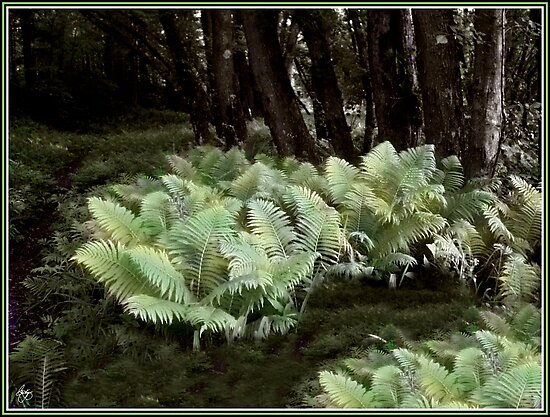
Ostrich Ferns Langdon Woods

The Rose and the Headdress


Maple Ablaze at Sunset


Indian Summer              Cards                 Fine Art Prints

Dusk Swim at Newfound Lake
"Sumac Moon"              Cards                Fine Art Prints


Episode 33 Dwight Newcomb


Dwight Newcomb came to Mowglis in 1960 and 1961, unusually, as a member of the Junior staff beginning with John Adams pioneering Yearling program that has restarted again at Mowglis as a means of creating a transition year between camper and staff status at Mowglis. Dwight was close friends with Jim West who was also a Yearling at Mowglis and the two of them paddled a canoe together on a long river trip from the Connecticut Lakes region all the way to Maine on the Saco River.

https://soundcloud.com/wayne-king-999726539/ep-33-mowglis-memories-dwight-newcomb


errata: Dwight mentions in the course of this podcast that WahPahNahYah (Dick West) played football with Jim Thorpe. Dwight undoubtedly spoke with Chief West about Thorpe but the two were not contemporaries and did not attend the same college. - wdk

Friday, May 15, 2020

Episode 31 Jim West Mowglis Memories Part 1

https://soundcloud.com/wayne-king-999726539/mowglismemories_episode-31_jim-west_part-1


 Jim West, a member of the Cheyenne nation, brother of Rick West (Den 1957 (corrected)) and son of WahPahNahYah (W. Richard "Dick" West) who came to Mowglis as a camper at the age of 11,  in 1957. Jim was in Toomai and brother Rick was in the Den the same year. He returned as a "Yearling"/Junior Counsel in 1960 under then-Director John Adams. In 1965 and 66 he returned to Mowglis as a Senior Counselor under the leadership of William B. Hart.

This first series of sound clips are taken from an address given by Jim at Pepperdine University in 2008 (see show notes for a link to the full address). They provide some insight into the world of Native American Indian people, and particularly the Cheyenne people, that adds context to Jim's life as well as his recollections of his years at Mowglis.

At the time he returned to Mowglis as a member of the Senior Staff, he was a freshman and sophomore in college - at The University of Redlands in Redlands, California.
  
I was only a very young camper in those days, but to me, at 7 and then 8 years old, he was a giant. Of course, he was physically a giant to me . . .  tall and strong, but to me, it was more his personality that made him a giant. Like his fellow counselor and friend Bill Boicourt, he was a larger than life personality. Bringing a gravitas - despite his youth, good humor and gregarious nature, to a staff that today we would see as iconic in and of itself: John Harmon, Bill Hart, Jerry Hakes, Frank Hubbard, Stu Klein and others.

It was my first exposure to American Indian culture and it was a magical experience for me. Years later I would learn from my father that my own heritage was Iroquois and Abenaki and I have embarked on my own personal journey to understand both why it was hidden for all those years and what it can mean to me in my own quest for spiritual understanding. So you can imagine how excited I was to catch up with my old counselor and friend Jim and his wonderful wife Elaine when I was traveling through New Mexico recently. 


2008 Address at Pepperdine University; Seaver College Distinguished Lecture Series - James West


About the art in Jim and Elaine's living room

Roman Nose (not shown)


Little Face - Cheyenne Warrior and member of the same clan (Kitfox Warrior) as Jim.


Little Face - Kitfox warrior Clan
Carved by W. Richard West - WahPahNahYah

WahPahNahYah was the first Indian to receive his MFA from Oklahoma University


The Red Pond - Abstract Realism, Painted by W. Richard West - WahPahNahYah
Abstract Realism - Can abstract forms but not the colors


Jim West & "Pops" WahPahNahYah, W. Richard West


WahPahNahYah and his Brothers and Mother (Reena). Jim's special uncle Harvey is pictured on Reena's lap.


Thunderbow (Great Grandfather to Jim and Rick West) Thunderbow was 16 when he fought in the Battle of the Little Bighorn (called by the Cheyenne the Battle of Greasy Grass Creek).

Thunderbow was about 8 years old when the Sand Creek Massacre took place.


Sand Creek Massacre: U.S. Army Colonel John Chivington
The Sand Creek massacre (also known as the Chivington massacre, the battle of Sand Creek or the massacre of Cheyenne Indians) was a massacre of Cheyenne and Arapaho people by the U.S. Army in the American Indian Wars that occurred on November 29, 1864, when a 675-man force of the Third Colorado Cavalry[3] under the command of U.S. Army Colonel John Chivington attacked and destroyed a village of Cheyenne and Arapaho people in southeastern Colorado Territory,[4] killing and mutilating an estimated 150–500 Native Americans, about two-thirds of whom were women and children.[5] The location has been designated the Sand Creek Massacre National Historic Site and is administered by the National Park Service. This was part of a series of events known as the Colorado War and was preceded by the Hungate massacre.[6]

Many of Chivington's troops refused to participate and testified against him in a trial by the Federal government.

"If we kill the nits the lice won't grow" - John Chivington

Thunderbow was 10 during the Washita Massacre (1868) - Led by George Armstrong Custer
The Battle of Washita River (also called Battle of the Washita or the Washita Massacre[4]) occurred on November 27, 1868 when Lt. Col. George Armstrong Custer’s 7th U.S. Cavalry attacked Black Kettle’s Southern Cheyenne camp on the Washita River (the present-day Washita Battlefield National Historic Site near Cheyenne, Oklahoma).

They were the most isolated band of a major winter encampment along the river of numerous Native American tribal bands, totaling thousands of people. But Custer's forces attacked their village because scouts had followed the trail of a party that had raided white settlers and passed through it. Black Kettle and his people had been at peace and were seeking peace. Custer's soldiers killed women and children in addition to warriors, although they also took many captive to serve as hostages and human shields. The number of Cheyenne killed in the attack has been disputed since the first reports.

Thunderbow was 16 when he fought in the Battle of the Little Bighorn (called by the Cheyenne the Battle of Greasy Grass Creek).


Warrior Returns with Friend's War Bonnet. Carved by W. Richard West - WahPahNahYah


Other references from the Podcast:

Jim's Name: Difficult to translate into arabic characters

Machmik, (the manner in which the eagle holds its head)
Putayeh
Monêsóonetaneo'o (Kit Fox Warrior Society)
Tsistsistas (The People - Cheyenne)


From Wikipedia: Fox Warriors Society (Vóhkêséhetaneo'o or Monêsóonetaneo'o),[3] also known as Swift Fox or Kitfox (sing. MónÄ—sóonetane, pl. MótsÄ—sóonetaneo'o; variant: sing. VóhkÄ—séhetane, pl. VóhkÄ—séhetaneo'o). This society is found among both the Northern and the Southern Cheyenne. The Coyote Warriors Society (O'ôhoménotâxeo'o) and Flintmen Society (sing. MótsÄ—sóonetane, pl. Motsêsóonetaneo'o) are branches of the Fox Warriors Society.[3] Among the Northern Cheyenne the Kit Fox Soldiers always claimed superiority over the others. Had strong ties through marriages with Kit Fox Society (in Lakota: Toka'la) affiliated families of Lakota Sioux.


The Sun Dance

From Wikipedia, the free encyclopedia


Ed Shaw - Went to teach at Bacone College where he met Dick West and connected him with Mowglis.


Tuesday, April 28, 2020

Jonathan Hulme


Den 1967 on the Pemi Peaks. Jon Hulme is pictured second from the right.
Jonathan Hulme


Jonathan "JaJa" Hulme came to Mowglis under the directorship of John Adams along with his big brother Bruce. Over the years a steady stream of Mowglis Men from the Hulme family lineage have been at Mowglis but only one family, The Feuers has equaled their undefeated record in the Red Racing crew boat. That is the reason why, with leadership from Henry Livingston, and the craftsmanship of John Harkness, the Hulme family and the Feuer family joined together to replicate the Mowglis crew boats in 2003.

Stroke of the winning Red racing crew in 1967 - his Den year - Jonathan Hulme is a quintessential Mowglis Man.

Came to Mowglis in 1961 with brother Bruce

Every Hulme that ever rowed on the red racing crew won their race.


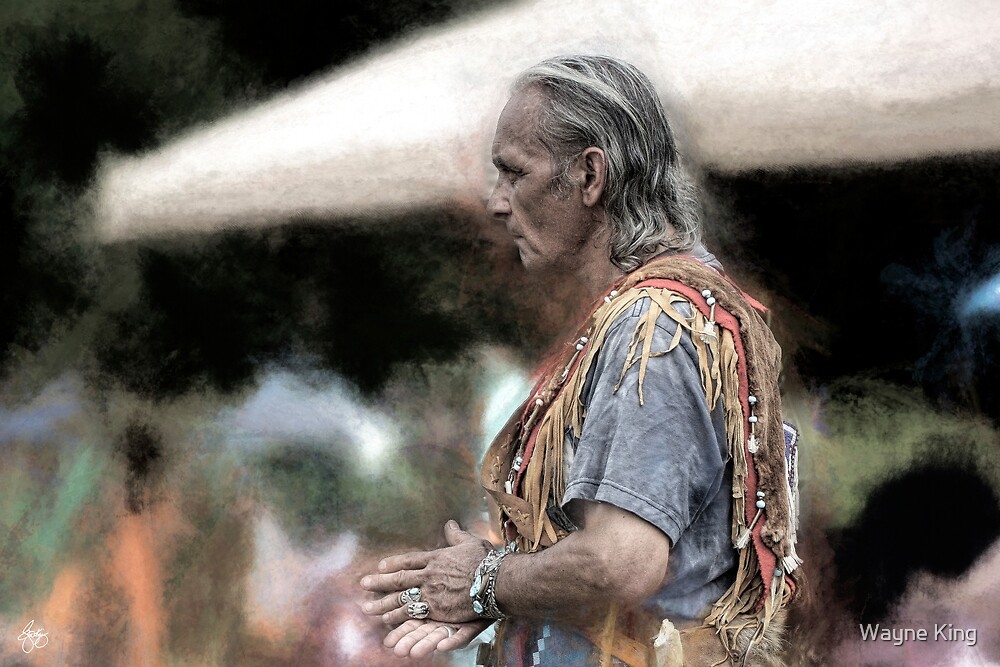
Dance of a Woodland Elder


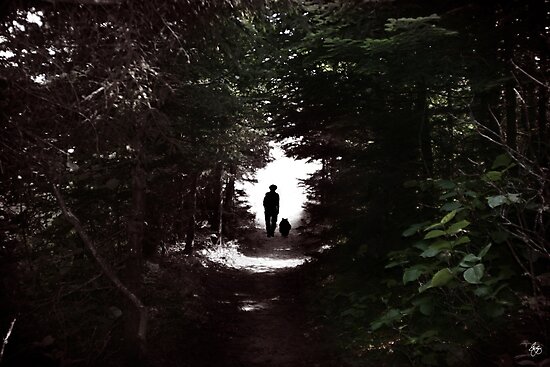
A hiker and his dog walk the last hundred yards to the summit of Mount Willard
in northern NH. Dedicated to my friend Charlie Feuer who introduced me to this amazing hike!
Hand colored monochrome image. Both the Original and Open edition prints are available here.


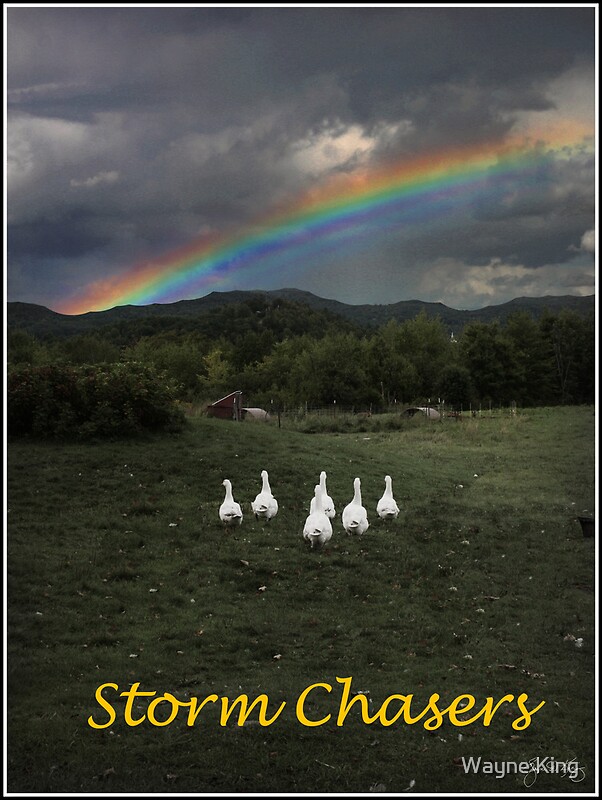
Storm Chasers


Albert Camus Quote

"In the depth of winter 
I finally learned 
that there was in me 
an invincible summer."
~ Albert Camus

Monday, April 27, 2020

Paul Brown

https://soundcloud.com/wayne-king-999726539/mowglismemories-podcast-28-paul-brown


Paul Brown's first climbing experience was climbing Lantern Hill in Connecticut with his English teacher Andy Popinchalk. Some years later, Paul and Andy and Jim Boicourt would launch the beginnings of the rock climbing program at Mowglis.

Few Mowglis displayed more of a joy for life, both in camp and on the trail. That joy made him a favorite among the boys. His influence and the stories of his prowess and his hijinx have echoed down over the years.  Oh the smiles, and frowns, that he brought to Mr. Hart's face in those years!

Paul may have missed his calling in life by not pursuing a career as a standup comic as witnessed by this interview. I guarantee you'll have a ball listening.


Albert Camus Quote

"In the depth of winter 
I finally learned 
that there was in me 
an invincible summer."
~ Albert Camus

Tuesday, April 21, 2020

Jim Storie Episode 27

Jim Storie and Tony Smith
Dinner with Jim and Nancy Storie

There are a lot of crew stories swapped by Mowglis around the campfire and lately on Zoom but few are more widely remembered than the crew race of 1973 when a very small Red Racing crew was pitted against a crew of the biggest boys that most of us had seen in the Den and Panther on the Blue Racing crew. It was the biggest upset that anyone could remember. But as always, the moment that the oar went up the flag pole it was over and the Mowglis brothers gathered arm in arm to sing the Mowglis boating song.

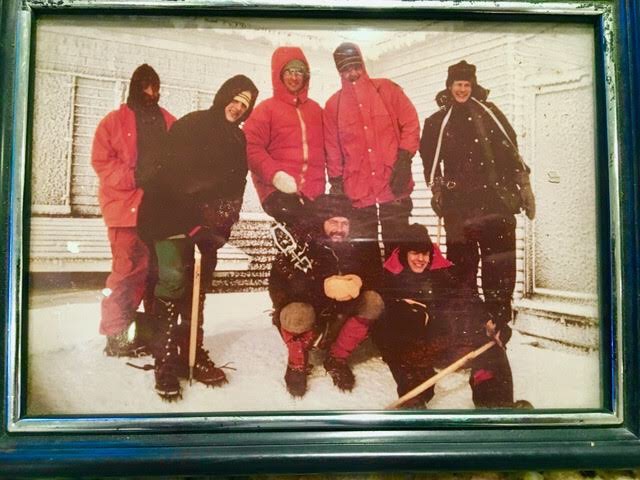
Jim Storie was the crew coach that year, his only year at Mowglis. Yet he is fondly remembered to this day and he has very fond memories himself of that summer. Jim came back to New Hampshire that same winter and was a part of the all Mowglis winter assault on Mt Washington. I've put some photos from that trip that Jim had on slides up on the show notes page at MowglisMemories.blogspot.com .

In late January I stopped in Richmond on my cross country trip with my pal Boof the Siberian Husky and visited with Jim and his wife Nancy.  I met Jim at "the Alley House", a building he is remodeling in Richmond center. 


Jim at the Alley House


Jim with President Nixon
The Alley House


We recorded this podcast over dinner before Boof and I hit the road headed home to New Hampshire.

Wayne & Jim 


The Mowglis Winter Assault on Mt Washington January 1974


Andy Popinchalk


Paul Brown & Jim Westberg


Jim Boicourt (center)


Original Art by Wayne King

Aspen on the Roaring Fork River


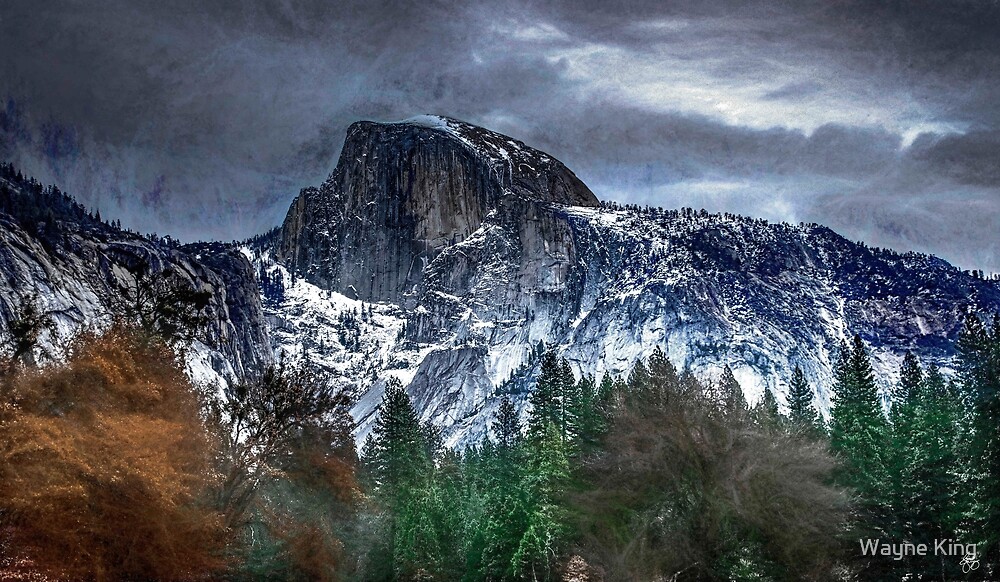
Storm Over Half Dome, Yosemite National Park


Esheheman's Breath

Sunday, April 12, 2020

Andy Popinchalk EP 25 & 26

Andy Popinchalk

Episode 25 & 26 

Andy Popinchalk Mowglis Memories Part 1 Andy Popinchalk came to Mowglis in 1967 and continued on and off for 11 years. He began as a tennis instructor and eventually became Tripmaster and a member of the Headquarters staff under William B. Hart. He is beloved among Mowglis and highly respected for his mountaineering prowess and enthusiasm as well as his fervent belief in the necessity of stewardship for the planet. This Podcast is the first of two dedicated to Andy. A third podcast in production will be a curated look at the life of Mowglis Tripmaster Jim Boicourt with whom Andy was exceedingly close. Jim died in an avalanche in the Colorado Rockies in July of 1976, scouting a route that he and Andy planned to climb together at the end of the summer.

Part 1:  https://feeds.podetize.com/CBkuza67nb.mp3
Part 2:  https://feeds.podetize.com/IIEiMOVt-F.mp3